Facelift surgery and energy-based treatments are not interchangeable. While non-surgical facial rejuvenation treatments are very popular and effective, Thermage FLX and Ultherapy Prime treatments have their limits when it comes to addressing skin laxity and a physically drooping facial structure. Energy treatments such as Thermage and Ultherapy can support collagen remodeling and mild tightening, while facelift surgery is designed to address more advanced laxity, jowling, loose neck skin, and structural descent. Keep reading to learn the difference between the two procedures and understand what course of action may be better suited to achieve your desired outcome.
First a Few Questions
- When you look in the mirror, are you pulling skin upwards to create a lifted or tighter appearance?
- Is your concern skin laxity/ loose skin or volume loss?
- Would you be happy with pausing your aging process or are you wanting to reverse signs of aging?
- Have you gone through any major hormonal changes due to age?
- Have you recently lost a significant amount of weight?
When it comes to choosing the right treatment, it’s important to be honest with yourself and your provider. Non-surgical energy treatments work to build collagen over an extended period of time, creating a subtle volume restoration meant to slow down the aging process and work with your own body’s natural ability to produce collagen.
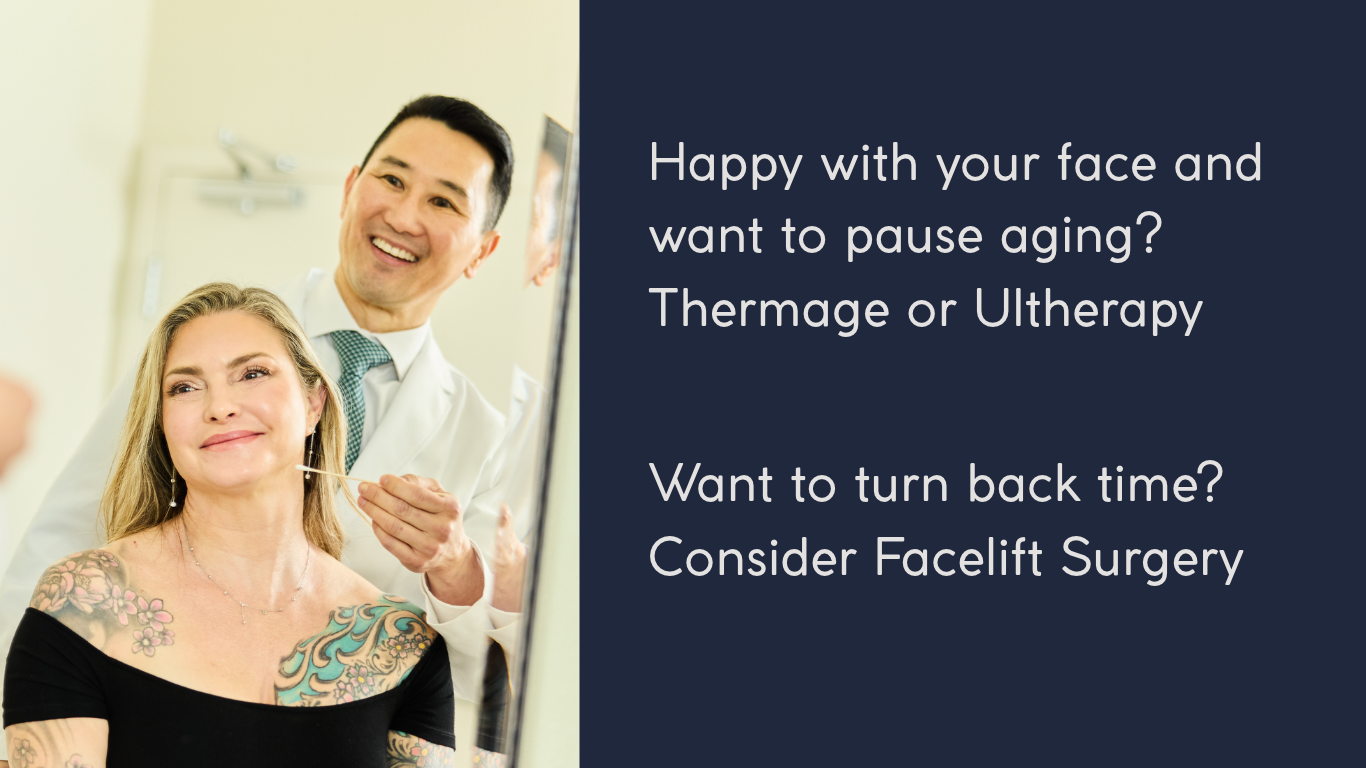
If you are finding yourself in the mirror pulling your mid-face back towards your temples or are dealing with excess skin that you’d like tightened up, this is a key sign that surgical intervention may be needed to adequately satisfy your aesthetic goals.
Ultherapy vs Facelift – What Each is Designed For
What does Facelift Surgery do?
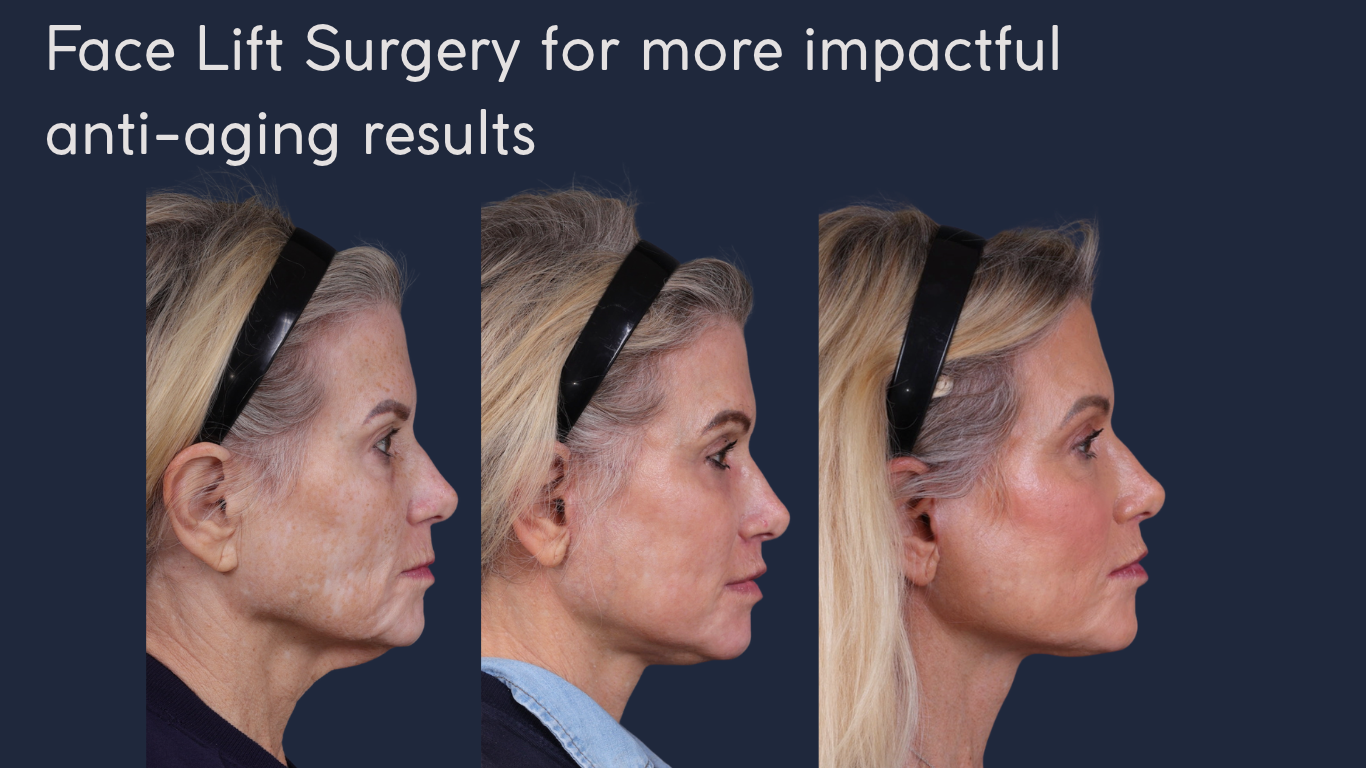
- Facelift surgery improves visible signs of aging in the face and neck.
- Repositions deeper facial tissues and muscles to improve sagging skin, jowls, and loose neck skin.
- Removes excess skin and creates a more defined jawline and neck contour.
- Permanent results lasting ten years or longer depending on maintenance
- Requires minimum two weeks of down time
What does Ultherapy Do
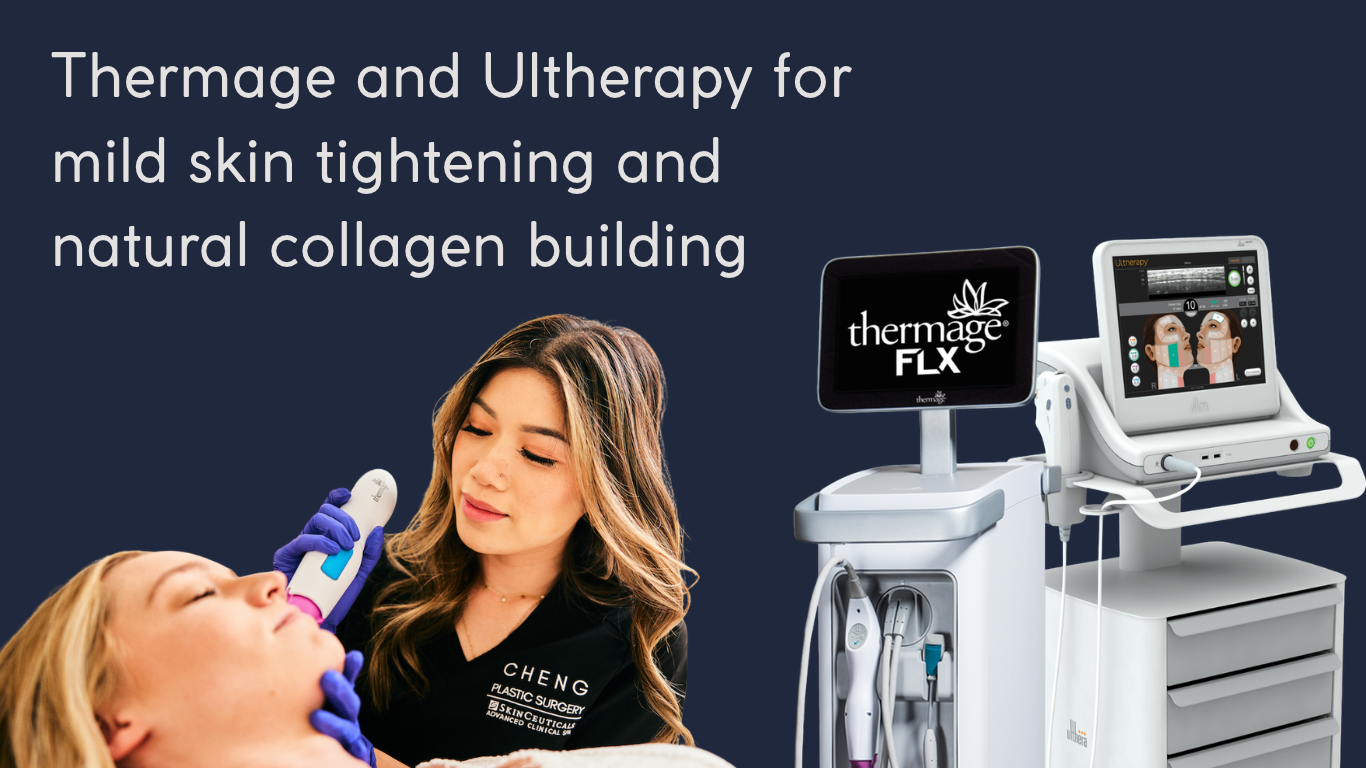
- Uses focused ultrasound energy to heat the deep layers of the skin without disrupting the skin's surface
- Guided by Ultrasound visualization to identify specific regions of the face, neck, and decollete for improvement.
- Natural regenerative process that produces fresh new collagen and elastin
- Slows collagen and elastic loss
- Does not correct sagging or loose skin
- Results are gradual, subtle, and dependent on the body’s ability to build collagen.
What does Thermage Do
- Uses advanced radio frequency (RF) energy to heat the deep, collagen-rich dermal tissue while keeping the skin surface cool, stimulating natural collagen production
- Slows collagen loss
- Does not correct sagging or loose skin
- Results are gradual, subtle, and dependent on the body’s ability to build collagen.
Skin Laxity vs. Volume Loss
Over time our body slows collagen and elastin production, two important factors in keeping our face plump and bouncy. The slowing of collagen reduces volume in our cheek and mid-face area. The slow of elastin causes our skin to become looser over time and creates the appearance of excess skin which can appear droopy as time goes on and collagen loss continues. Combine both collagen loss and elastin loss with gravity and you have the typical human experience of aging.
It may feel like these changes happen overnight. We wake up looking more tired than usual or our face has suddenly lost the youthfulness of younger years. However, these changes happen to everyone, and the changes happen over years and years of a life well lived.
Depending on your age and lifestyle, you are either in the preventative or corrective time of your life.
Preventative
- Like your current facial structure but want to preserve your current aesthetic
- Want a subtle enhancement to your skin tightness
- Looking to slow down aging, not reverse aging
Corrective
- Postmenopausal or experiencing other major age-related hormonal changes
- Have loose skin from significant weight loss
- Want a more predictable anti-aging result from a procedure
- Experiencing descended facial features such as sagging skin
The Surgical Experience
If by the end of reading this article you are realizing you may be more suited to a surgical procedure to reach your aesthetic goals, the thought of undergoing surgery may be intimidating. However, your results will be more predictable and to the point. After surgery, you are encouraged to begin a preventative maintenance treatment plan to preserve the results of your surgical investment.
What are the steps in planning for facelift surgery?
- Schedule a Comprehensive Facial Assessment with one of our double board-certified facial plastic surgeons.
- Meet with our Patient Care Coordinator to discuss recovery planning, finances, and support available to you through Cheng Plastic Surgery.
- Coordinate with your primary care physician to ensure you are in good health to receive surgery.
- Plan for about 2 weeks of rest and recovery post-surgery.
- Attend all follow up appointments to monitor healing.
- Work with your surgeon and trusted nurse team to create a maintenance plan to protect your surgical investment.